

Susfectin™ Transfection Reagent
Cat. No.
G4000
Unit
1.0 ml
Price
$245.00
| Cat. No. | G4000 |
| Name | Susfectin™ Transfection Reagent |
| Description |
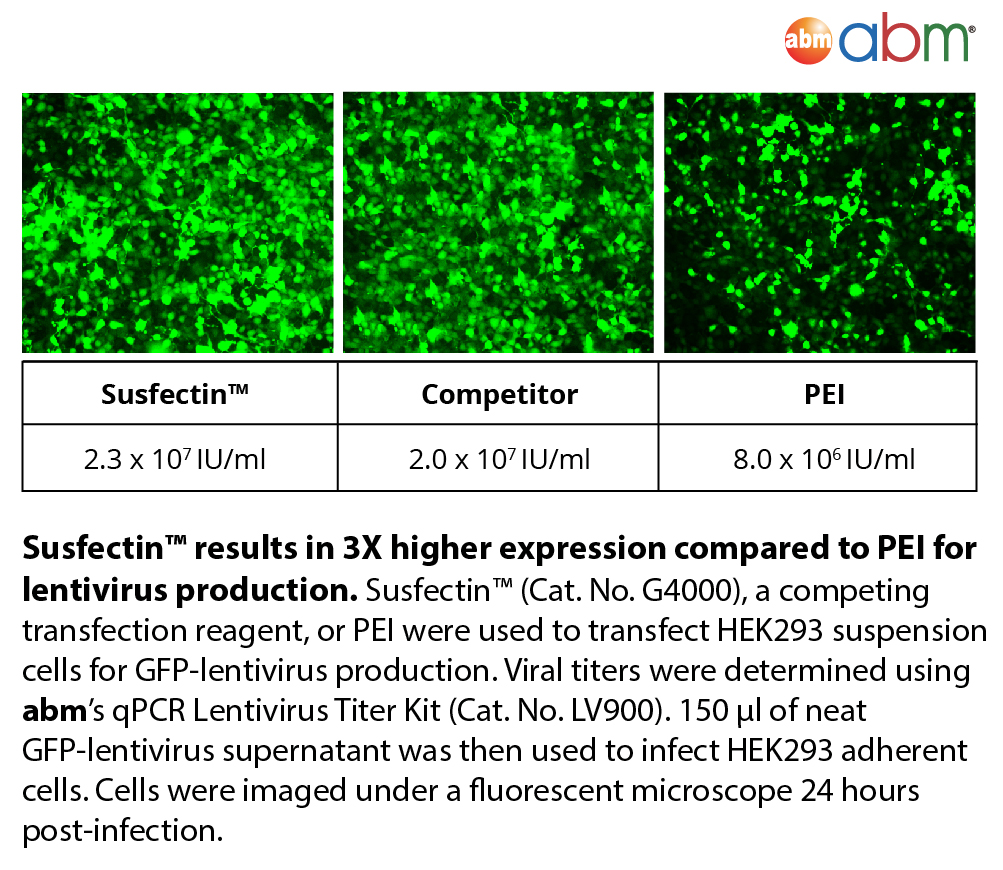
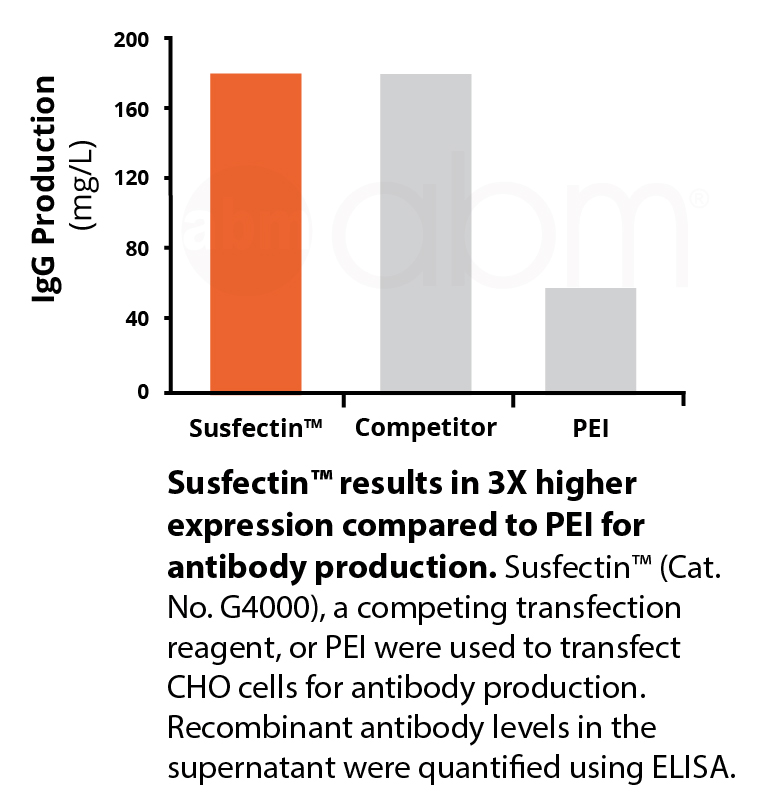
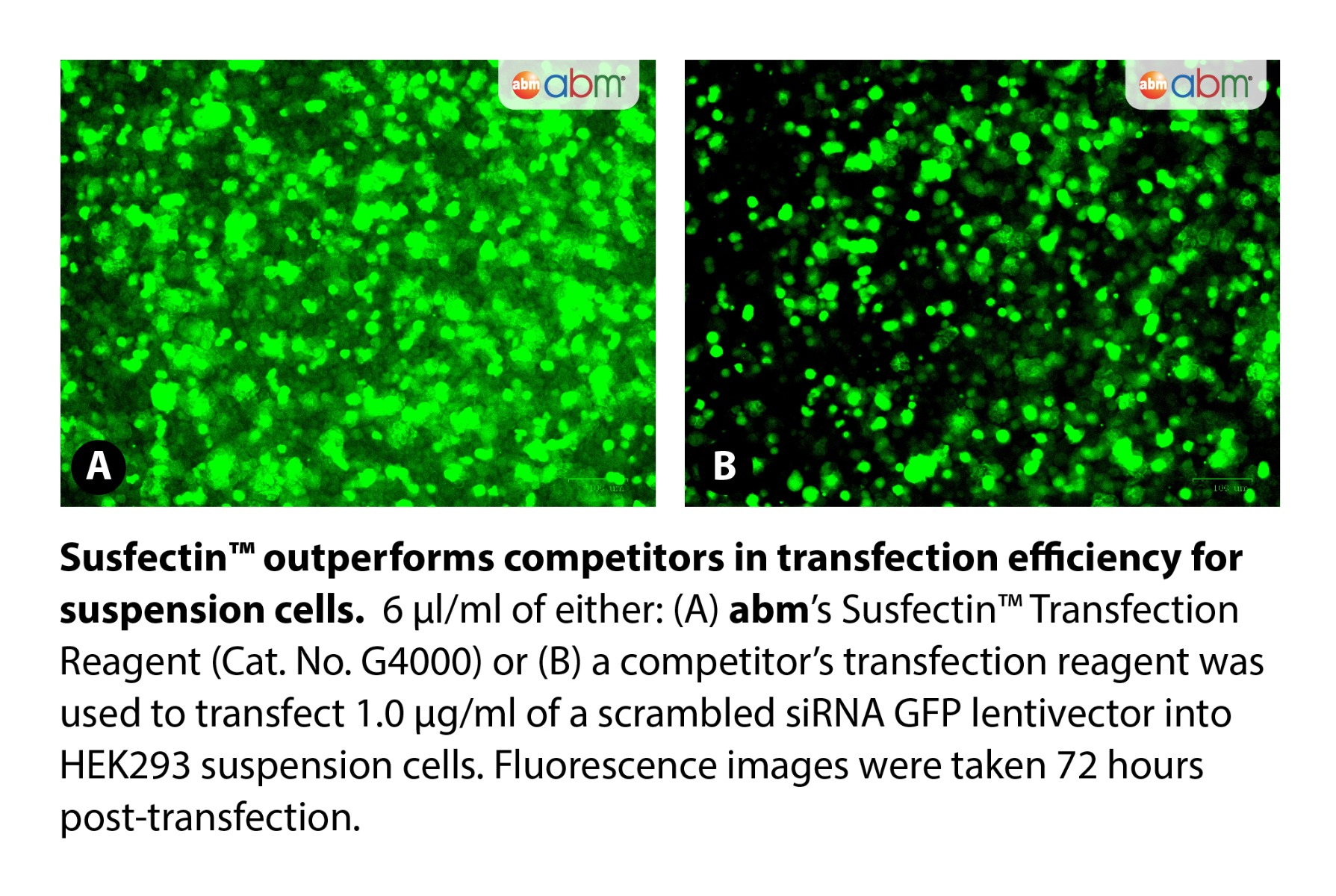
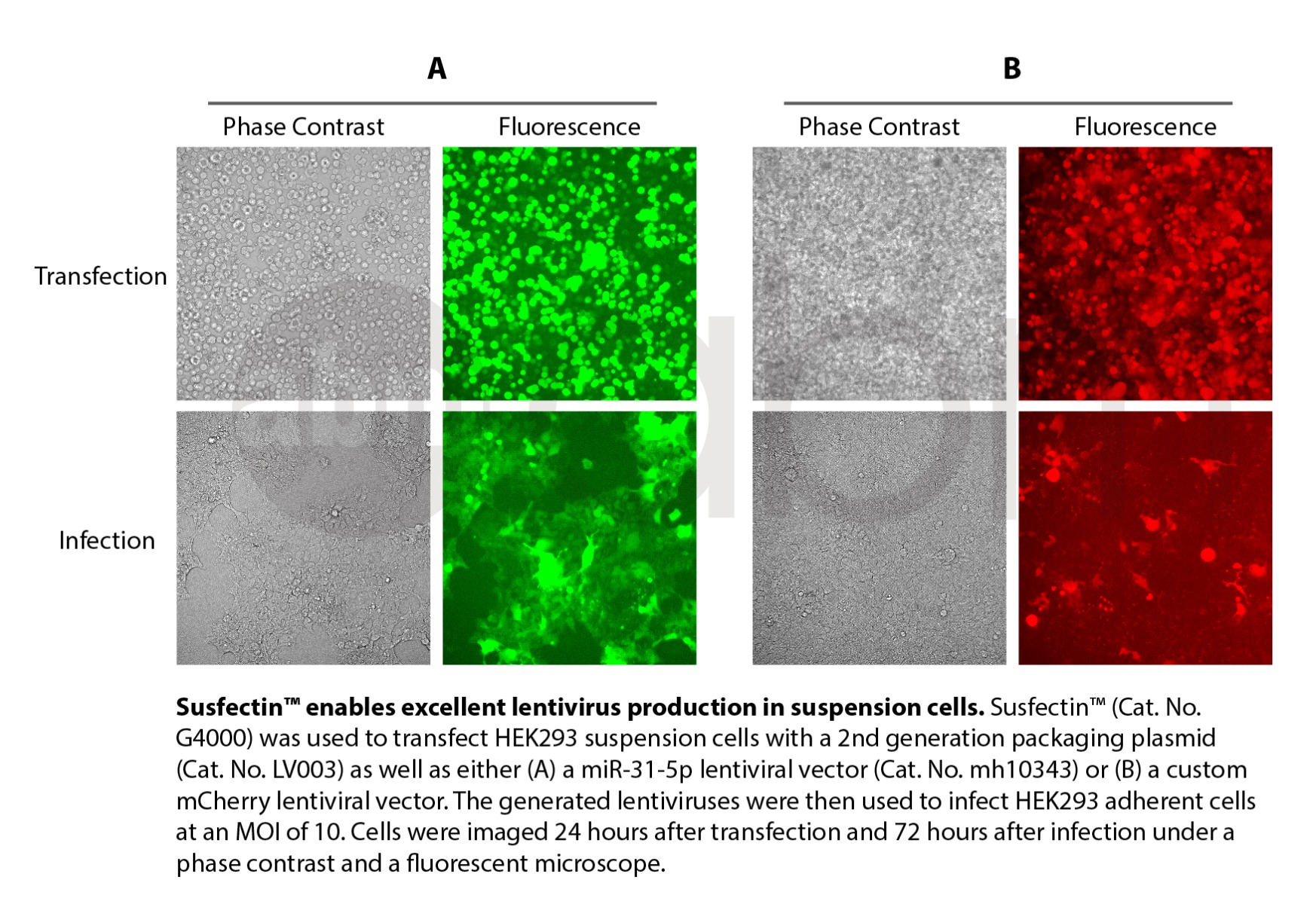
Get 3X higher expression compared to PEISusfectin™ is a biodegradable, polymer-based transfection reagent for the transfection of suspension cells. Susfectin™ forms complexes with DNA to enable the transport of DNA into a variety of suspension cells. This polymer is engineered to rapidly degrade after transfection, making it much less cytotoxic to cells and improving both the transfection efficiency and productivity of transgene expression. Susfectin™ is your ideal choice for antibody (CHO) and virus (293) production! Product Features:
|
| Unit | 1.0 ml |
| Application |
Transfection of nucleic acids into mammalian cells. |
| Storage Condition |
Store at 4°C. |
| Material Citation | If use of this material results in a scientific publication, please cite the material in the following manner: Applied Biological Materials Inc, Cat. No. G4000 |

Search CoA here
MSDS
| What types of cells is Susfectin™ optimized for? | |
|
Susfectin™ is specifically designed for suspension cell lines such as CHO and HEK293, and is ideal for protein production, antibody manufacturing, and viral vector generation (e.g. AAV, lentivirus).
|
| How does Susfectin™ perform compared to PEI? | |
|
It delivers approximately 2–3× higher expression than PEI in suspension cultures, thanks to its biodegradable polymer that enhances transgene delivery and reduces toxicity.
|
| Is Susfectin™ suitable for large-scale bioproduction? | |
|
Yes. Its scalability and low toxicity make it well-suited for industrial-scale applications, including antibody and viral vector production in bioreactors.
|
| Is the reagent compatible with serum-containing media? | |
|
Yes, it works well in complete media with serum, eliminating the need for a media change before or after transfection.
|
| How cytotoxic is this reagent? | |
|
abm's transfection reagents are designed for minimal cytotoxicity. Susfectin™ uses a biodegradable polymer, while DNAfectin™ Plus uses a balanced polycation/liposome formula—both preserve cell health during and after transfection.
|
| How should these reagents be stored? | |
|
Store both reagents at 4 °C. Do not freeze, as freeze–thaw cycles can degrade performance. Aliquoting is recommended for routine use.
|
| What is the general transfection protocol? | |
|
Each reagent is mixed with plasmid DNA to form complexes, then added directly to cells. No media change is required. Specific DNA:reagent ratios and conditions vary and are provided in the respective datasheets.
|
There are no references for this product yet!
This product has no review yet.
Controls and Related Product: